 PURE SHIELD
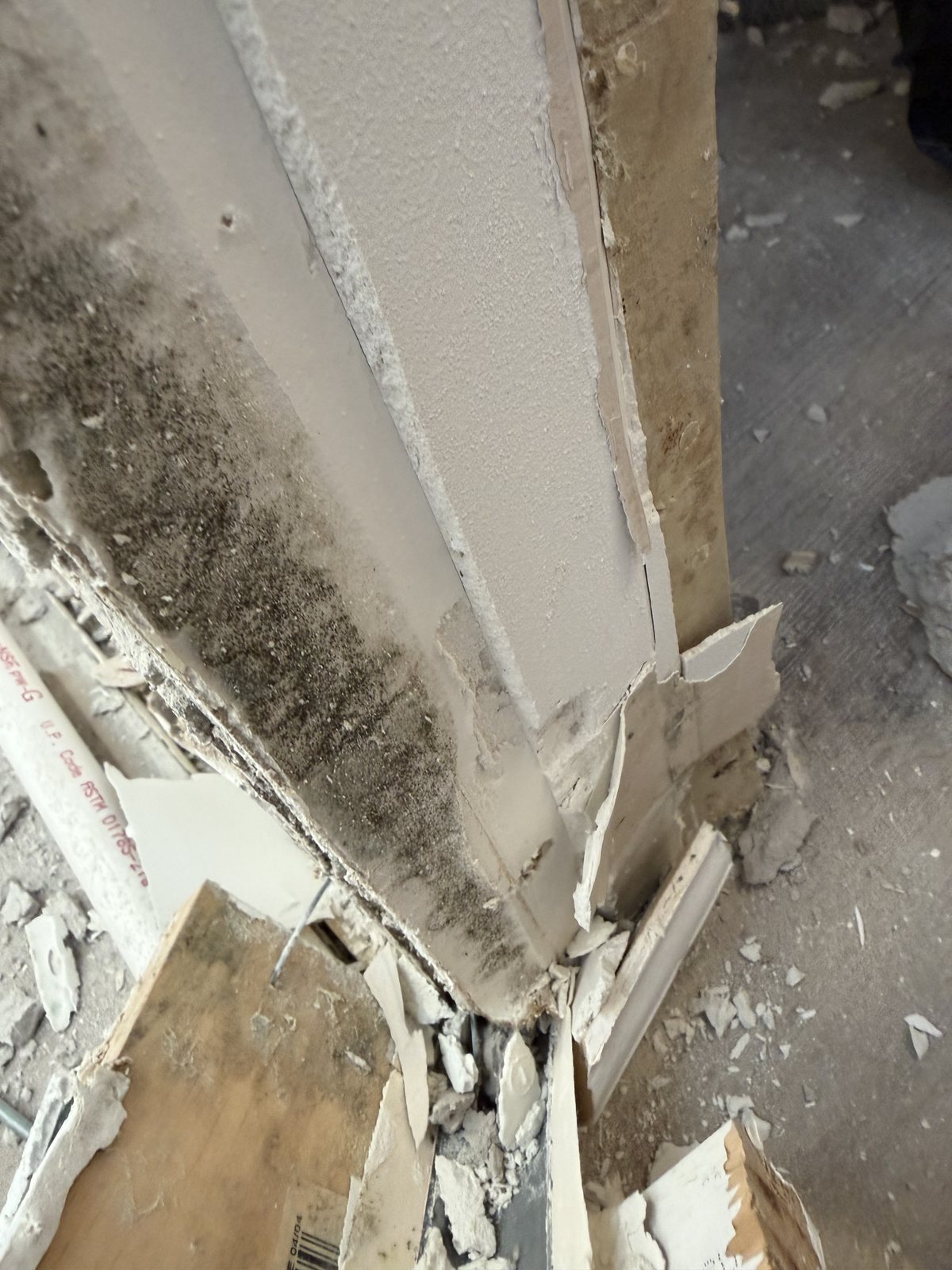
The mold in this Coconut Creek condo was not on the walls. It was along the bottom of them, a band a few inches high, in room after room. That pattern is its own diagnosis. Water was not coming from above. It was moving along the slab and wicking up into the drywall from below, and it had been doing it for a while.
The source was a failed supply line.
A failed supply line is usually an emergency water extraction call. This one was not, and the reason is worth understanding, because it is the version that does more damage.
When a line lets go all at once you get standing water, and standing water gets noticed. Somebody calls that same hour. When a line seeps instead, nothing pools and nothing drips where you can see it. The water just moves quietly along the slab, month after month, soaking the bottom of every wall it reaches and feeding mold behind them while the rooms above look completely normal. Nobody calls, because as far as anyone can tell there is nothing to call about.
That is why the visible staining here was the smallest part of the problem.
The staining you could see from the room was the smallest part of it.
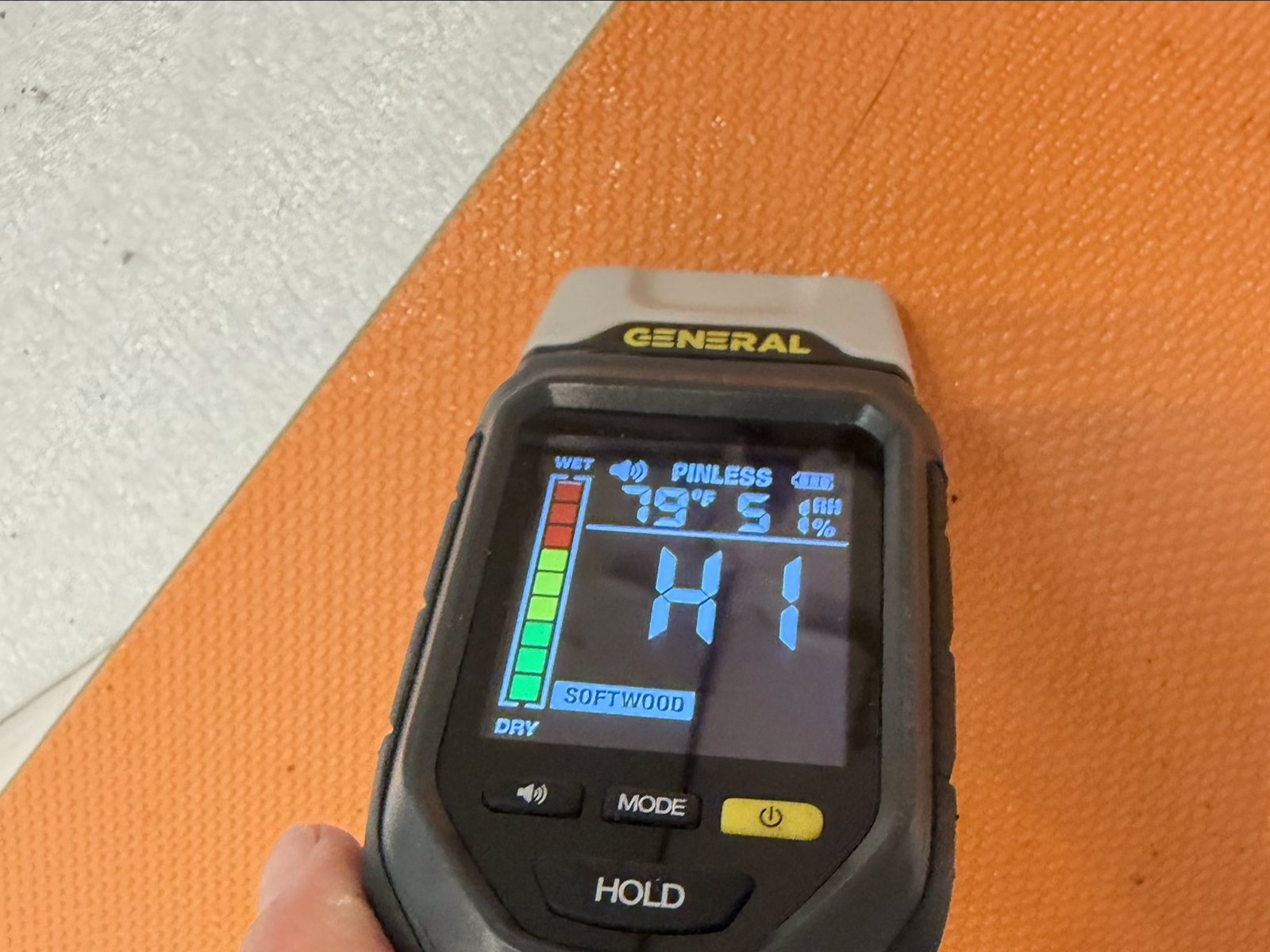
Our moisture meter came back reading off the top of its scale on wood that looked perfectly fine. When we pulled the baseboards, the backs of them were covered. When we lifted the plank flooring, there was growth underneath the underlayment, where nobody would ever look. And when we opened the wall, the concealed side of the drywall was far worse than anything showing on the finished side.
It had also traveled. A supply line does not politely soak one room. Water follows the slab, so by the time we were done tracing it, the affected area ran from the living room through to the laundry, which is exactly the kind of spread that gets missed when someone only treats the room where the stain showed up.
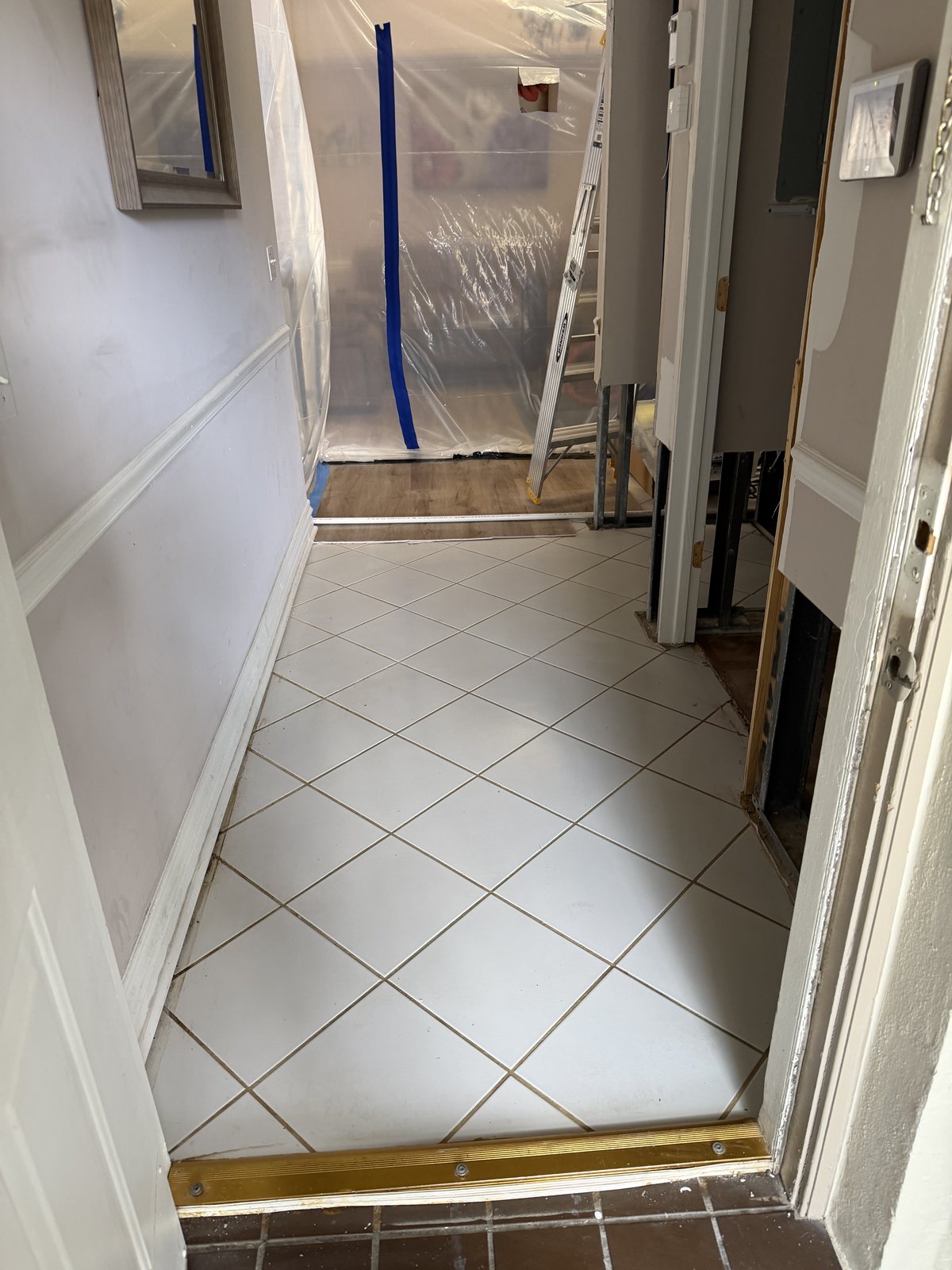
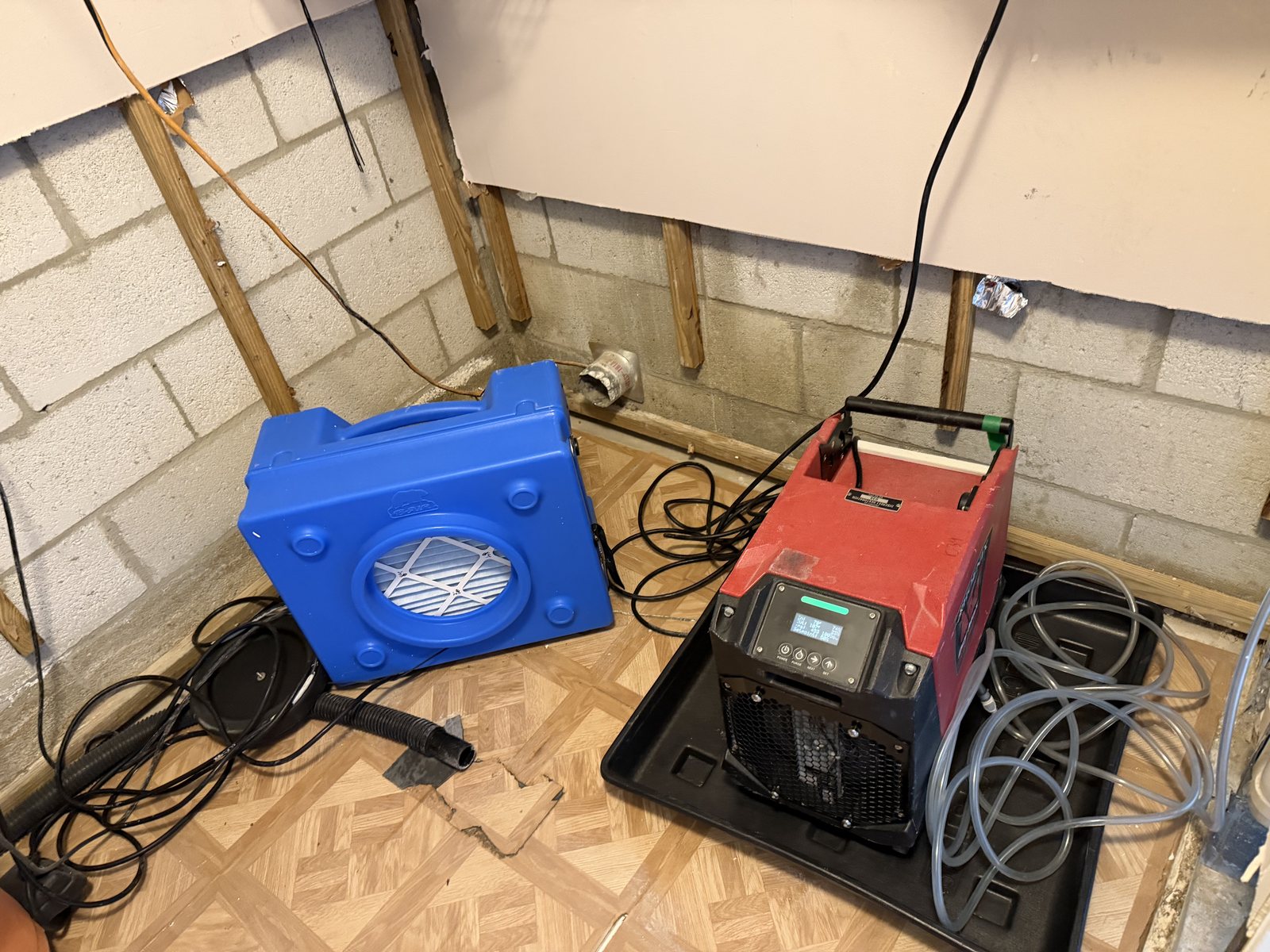
Mold spreads the moment you disturb it, so nothing came out until the area was sealed. We built containment with poly sheeting, taped it off at the openings, and ran a HEPA air scrubber the entire time we worked, so spores were being pulled out of the air rather than drifting into the rest of the unit.
From there we cut the drywall back past the moisture line, not just past the staining, and removed the baseboards and the affected underlayment. Porous materials cannot be wiped clean once mold has rooted into them, so they come out. What stayed got HEPA vacuumed and treated.
Then the drying started. A dehumidifier and air movers went in and stayed until the structure read dry on a meter, not until it looked dry. Those are very different things, and in a slab building in South Florida the difference is whether the mold comes back in six months.
This was a lived-in home the whole time. The work stayed inside the containment and the rest of the condo stayed usable.
Most of Coconut Creek’s condo stock went up between the 1970s and the 1990s, on slab, with the original supply lines still in the walls. Those lines are now decades old. When one lets go behind drywall in a ground-floor unit, there is nowhere for the water to go but sideways along the slab and up into everything it touches. The unit owner often has no idea until a baseboard goes soft or the room starts to smell.
If you are in a condo here and you notice staining low on a wall, a soft baseboard, or a musty smell you cannot place, the problem is almost always below and behind what you can see.
See how our mold remediation works, or call (954) 778-0925 for a free inspection.