After any water event
Burst pipe, appliance failure, roof leak, or extraction that's already done — if materials got wet, they need real drying, not just airflow.
 PURE SHIELD
Getting the water out is half the job. Structural drying is the other half — drying what's inside your walls and floors to verified-dry readings, so mold never gets its 24-hour head start.
If any of these sound familiar, it's worth a free inspection.
Burst pipe, appliance failure, roof leak, or extraction that's already done — if materials got wet, they need real drying, not just airflow.
If a room still smells damp days after a leak was 'handled,' moisture is still trapped in the drywall, framing, or flooring.
Wood and laminate cup and crown when moisture underneath never fully dried.
Paint blisters and drywall that dents to the touch mean the wall is still wet inside.
Surfaces dry fast in AC — the inside of the wall doesn't. Fifteen minutes with a moisture meter settles it, and our inspection is free.
Closing up walls or laying new floors over damp structure locks the moisture in. Verify dry first, then rebuild once.
Meters and thermal imaging show exactly how far water traveled — into walls, under floors, behind cabinets — so nothing wet gets missed.
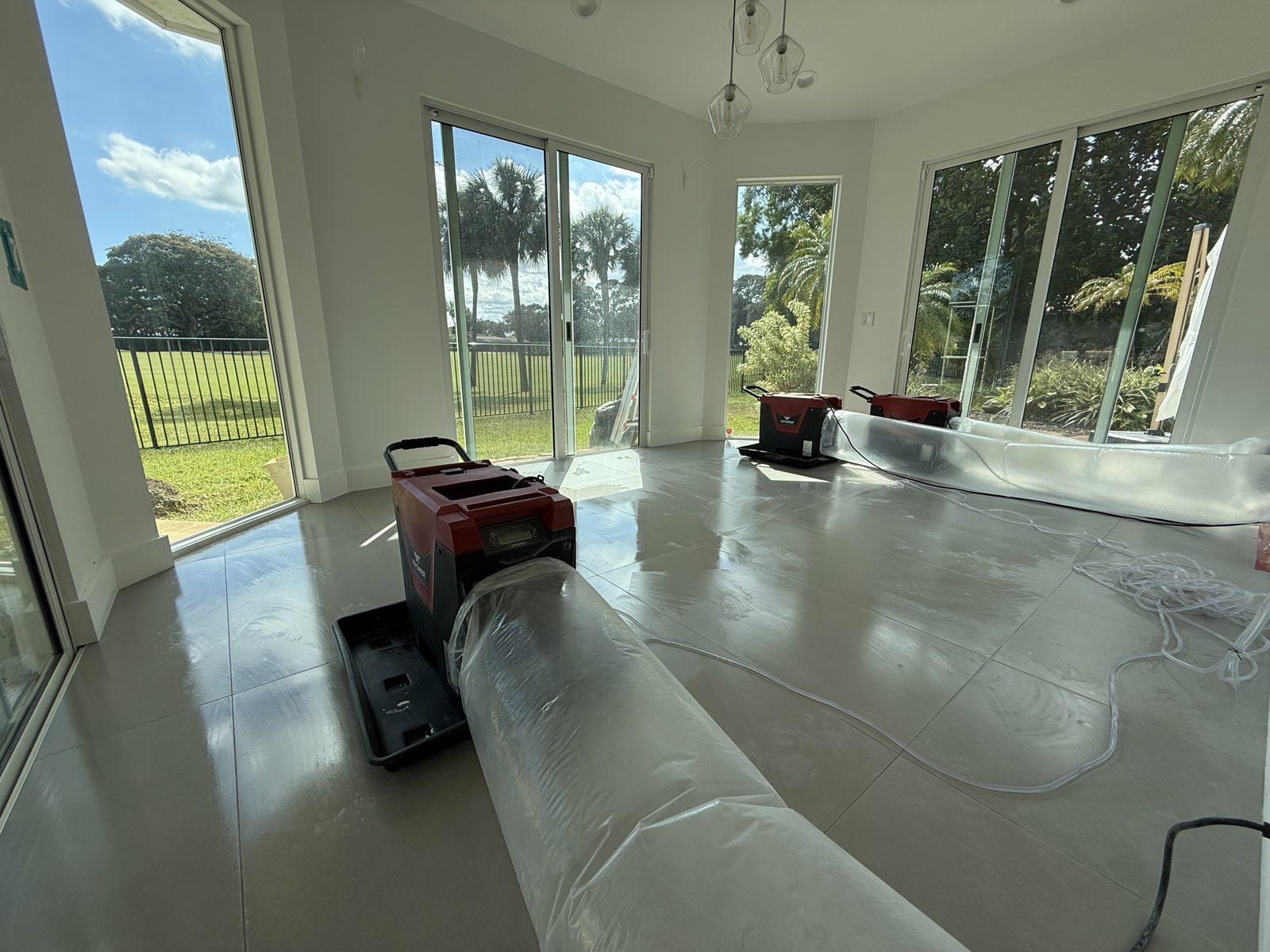
Commercial dehumidifiers and air movers, placed for the specific materials and layout — not a fan pointed at a wall.
Sometimes drying means small, targeted openings to reach wet cavities. We make the fewest cuts that get air where it has to go.
We check moisture levels every day and reposition equipment as materials dry — the readings decide, not the calendar.
The job ends when meters hit dry-standard targets. You get the documentation — insurers and future buyers respect readings, not promises.
We make sure whatever caused the water is addressed before we pull equipment, because if the water comes back, so does the problem.
Structural drying is where water damage either ends or turns into a mold problem. Mold can take hold within 24 to 48 hours of water intrusion, which is why we treat drying as its own discipline — with emergency water extraction getting the standing water out first, and mold remediation standing by if moisture sat too long before we got the call. If you’re anywhere in Palm Beach or Broward and something got wet, the inspection is free and the moisture meter doesn’t lie.
Actual jobs we've completed, shown with our own photos.
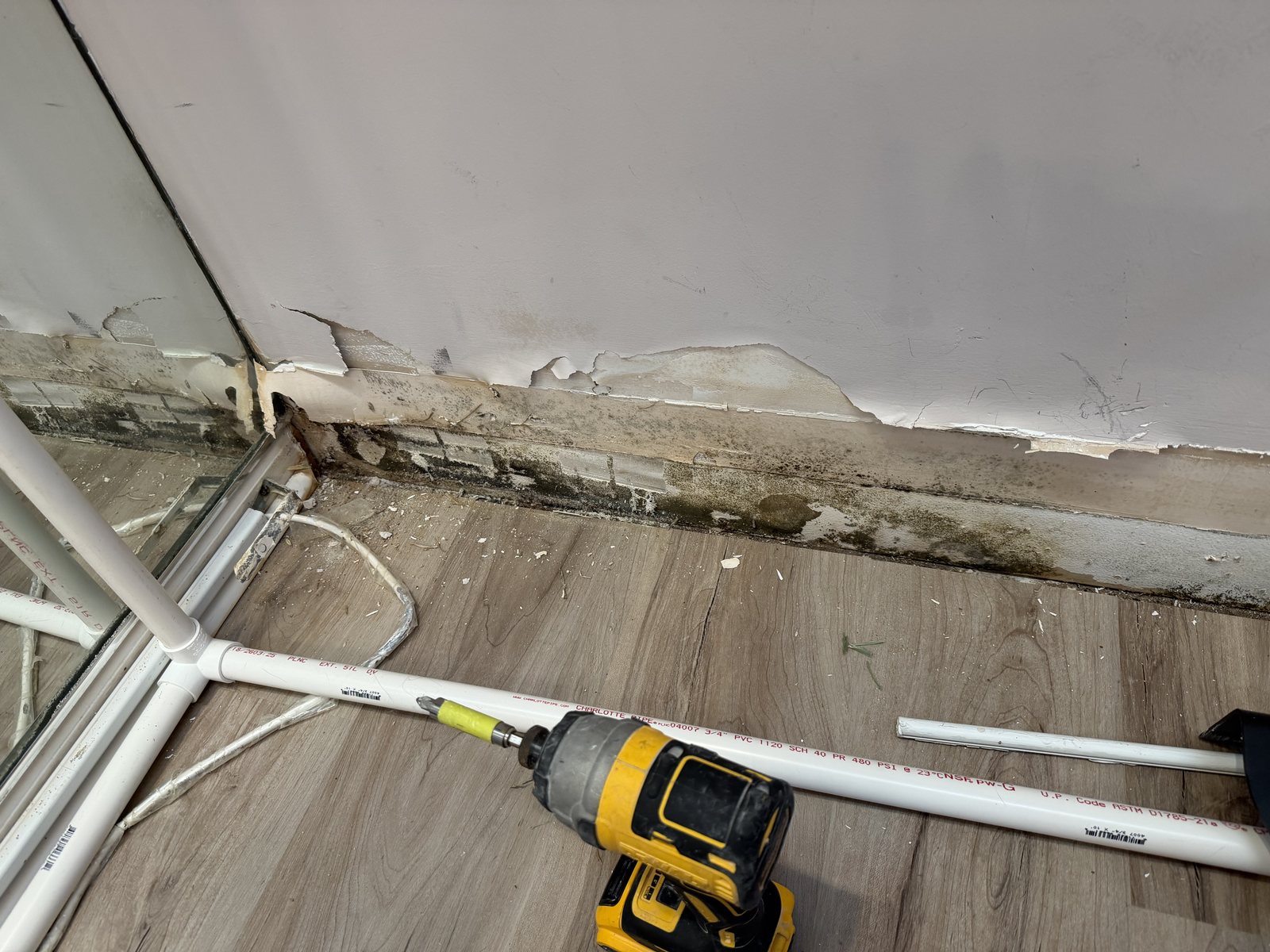
A failed supply line ran long enough to push water along the slab and up into the drywall in room after room …
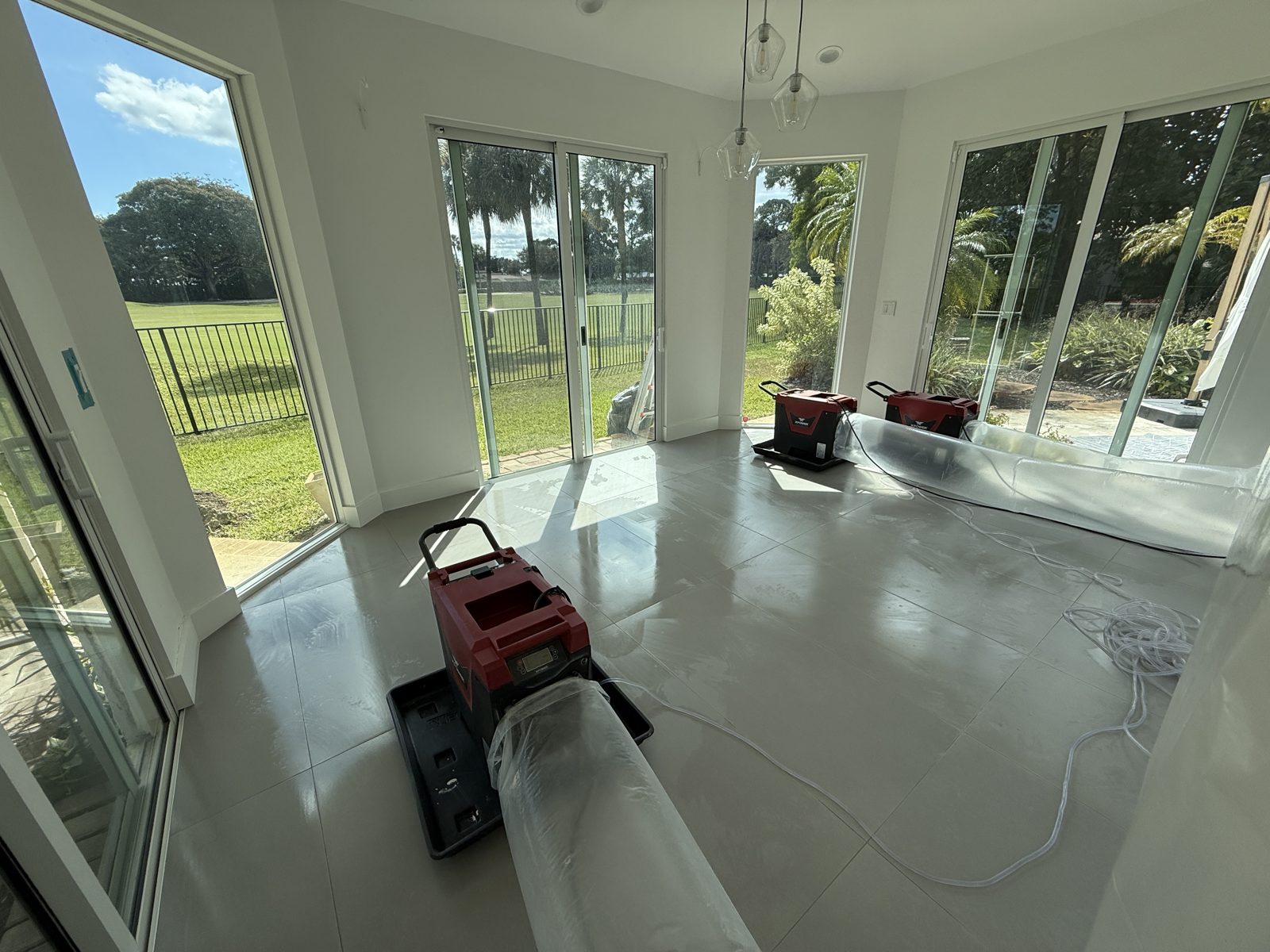
Water intrusion in a newer open-plan Coral Springs home. We contained the affected wall, ran ducted drying …
Typically 2 to 4 days of equipment running, sometimes longer for saturated materials or South Florida's summer humidity. We take readings daily, and the equipment comes out when the numbers say dry — not before, not after.
Household fans and AC dry surfaces, not the inside of walls and floors. Trapped moisture is exactly how a 'handled' leak turns into a mold job a month later. Commercial dehumidifiers pull moisture out of materials; fans just move air past them.
Only when the moisture map says there's no other way to reach a wet cavity, and then we make the smallest openings that work. Plenty of jobs dry fully without any demolition.
When it follows a covered water event — burst pipe, appliance failure — drying is usually part of the same claim. We document moisture readings from first visit to verified-dry, which is exactly what adjusters want to see.
As part of a water damage claim it's usually folded into the overall job. Standalone, most residential drying runs from several hundred to a few thousand dollars depending on how many rooms and how much equipment it takes. Free inspection first, honest number before we start.
Tell us what's going on and we'll get right back to you. For active emergencies, we answer 24/7.
(954) 778-0925