 PURE SHIELD
Florida licenses mold inspection and mold remediation as two separate jobs, and in most cases the company that tests your home cannot be the company that cleans it up. Here is how to tell which one you need and how to check that whoever shows up is actually licensed.
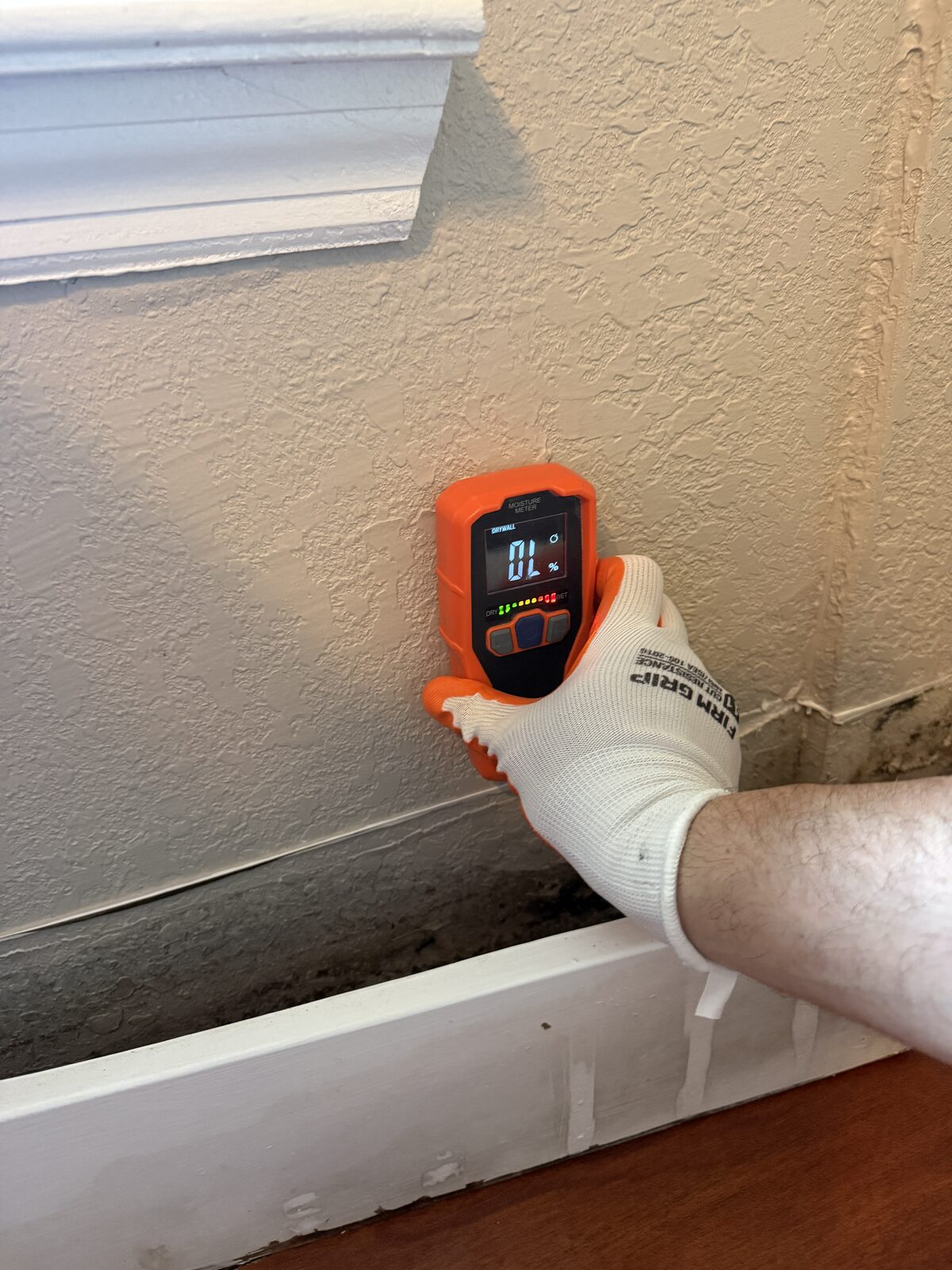
You find a dark patch behind the bathroom vanity, or the whole hallway starts smelling like a wet basement, and the first search you do turns up companies offering mold testing, mold inspection, mold removal, and mold remediation as though those are four names for one thing. In Florida they are not.
Florida licenses mold inspection and mold remediation separately, and in most cases one company cannot legally do both on the same house. A mold assessment is the diagnosis, performed by a licensed mold assessor holding an MRSA license number. Mold remediation is the cleanup, performed by a licensed mold remediator holding an MRSR number.
Under Florida Statute 468.8419, an assessor may not remediate a structure their company assessed in the previous 12 months, and a remediator may not assess a structure they remediated in that window.
If you only have a small, obvious problem, you may need only a remediator. If the mold is spreading, the source is unclear, or an insurance claim is involved, start with an independent assessment. (Statute references verified as of August 2026.)
A mold assessment is a sampling and evaluation process that ends in a written finding, not a walk-through with a flashlight. Florida defines mold assessment as physical sampling and detailed evaluation of data from a building history and inspection, used to form an initial hypothesis about the origin, identity, location, and extent of mold growth covering more than 10 square feet.
That definition does real work, and two parts of it matter to you:
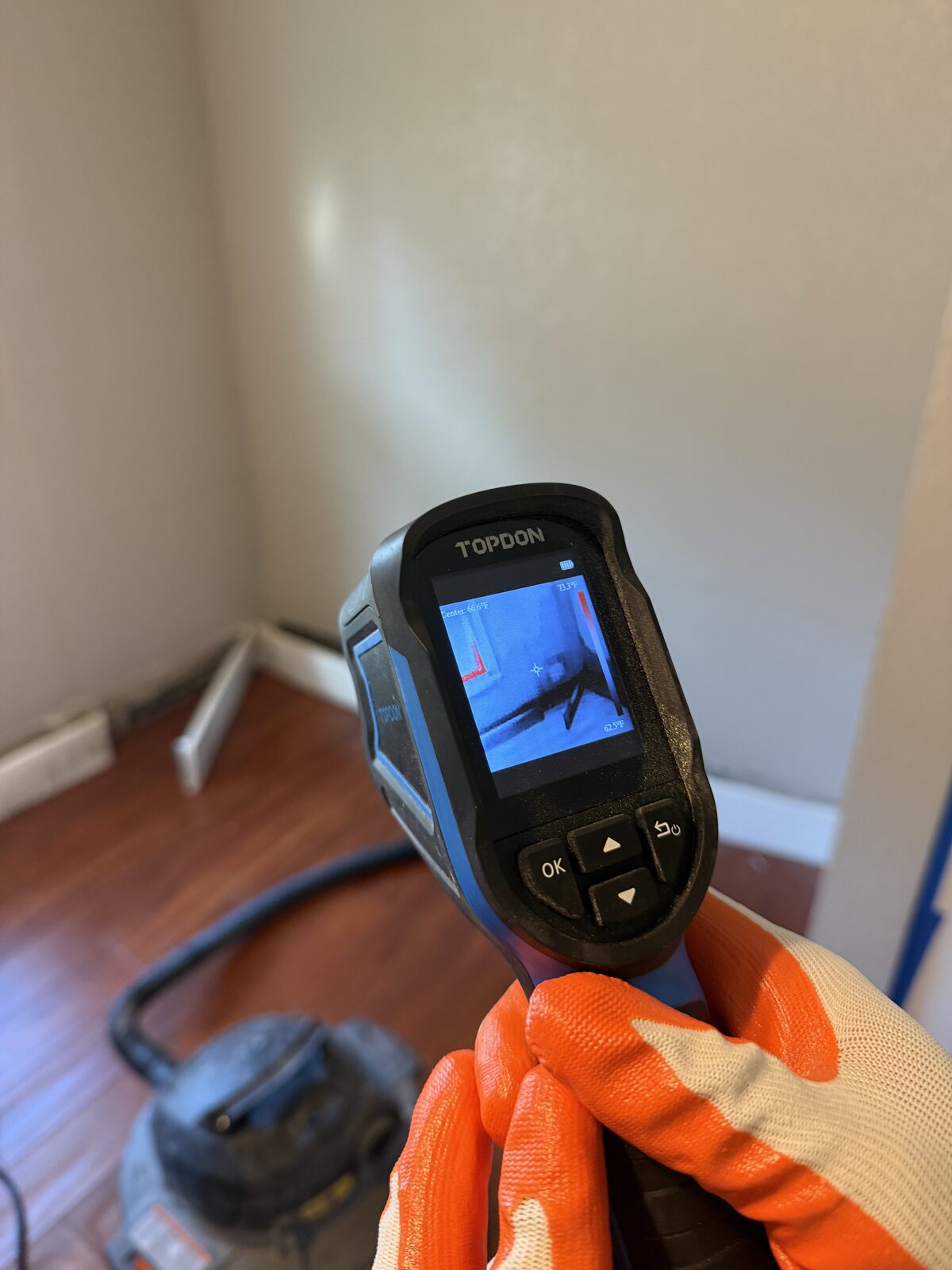 A thermal camera finds temperature differences behind the surface. It is how a remediator narrows down where water went, and it is not the same thing as a licensed mold assessment with lab samples.
The 12 month rule exists to remove the incentive to find more mold than is really there. A company that both diagnoses the problem and gets paid to fix it has an obvious conflict, and Florida wrote that conflict out of the statute. Section 468.8419 also closes the side doors around it:
Here is the part most articles on this topic leave out, and you should know it because it changes how you read a company’s answer. There is a real exception.
The 12 month restriction does not apply to a Division I certified contractor, which under Florida law means a general contractor, a building contractor, or a residential contractor. A firm holding one of those licenses can legally assess and remediate the same structure. Where that happens, the department may require the remediation contract to disclose your right to request competitive bids.
So “can one company do both” has an honest answer of “usually no, sometimes yes.” If a company tells you they handle testing and removal together, the useful question is not whether they are lying. It is which exemption they are operating under, and whether they will say so plainly.
Pure Shield is a licensed mold remediator, license number MRSR5407. We do not do our own clearance testing. When a job needs independent verification you get it from a third party with no stake in how big the job turns out to be.
Every mold license in Florida is public, free to look up, and takes about a minute to verify at myfloridalicense.com. Search the company or the individual’s name and read four things off the record:
One more thing that is easy to overlook: Florida requires the contract for mold assessment or mold remediation to be a signed document or electronic record. A handshake and a number scrawled on the back of an estimate does not meet that bar.
Remediation is containment, removal, treatment, and verified drying, in that order. Once you have a protocol, or once a remediator has scoped an obvious and contained problem directly, the work looks like this:
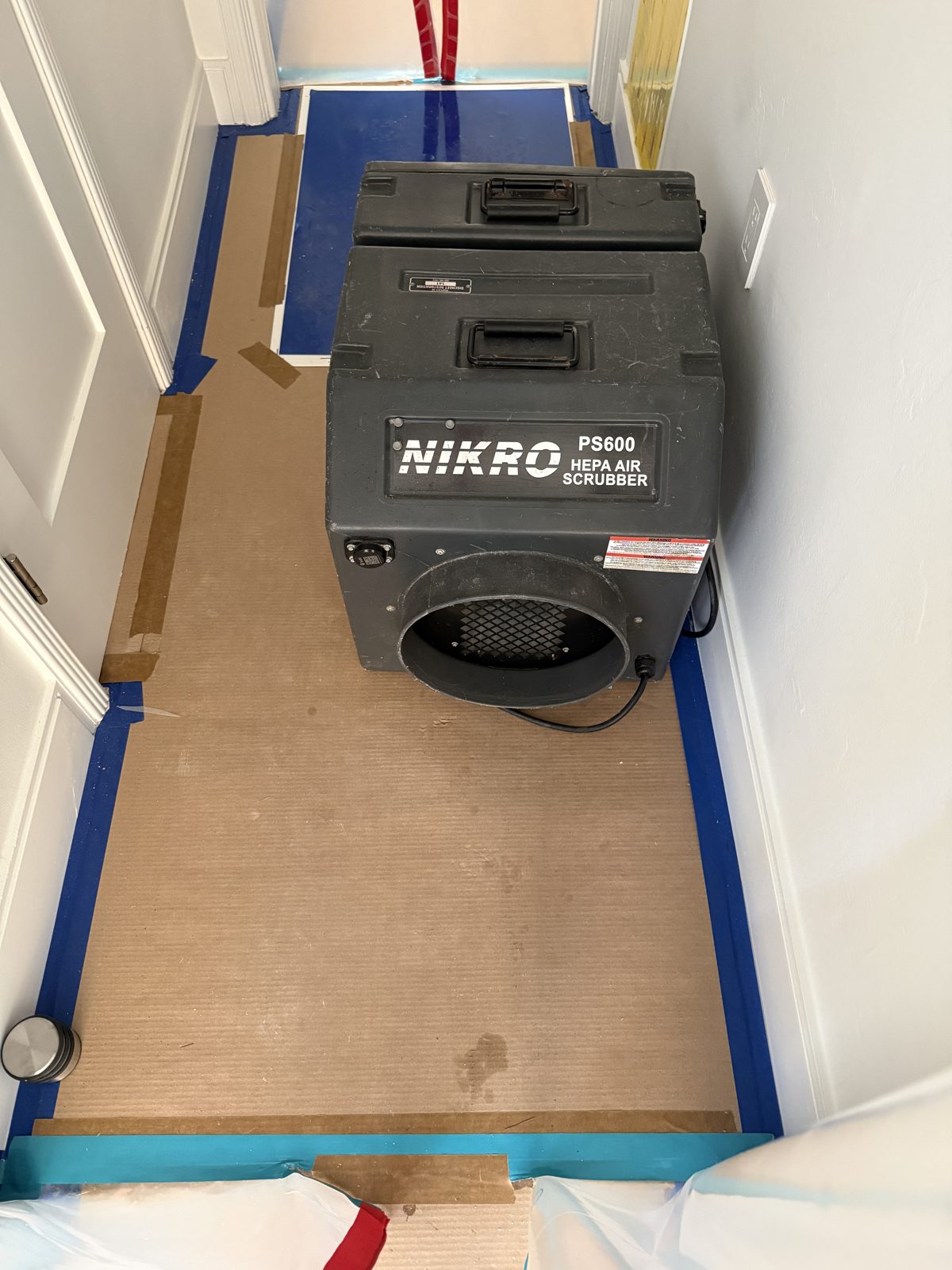 Containment first. Negative air and sealed work zones keep spores from riding airflow into the rest of the house.
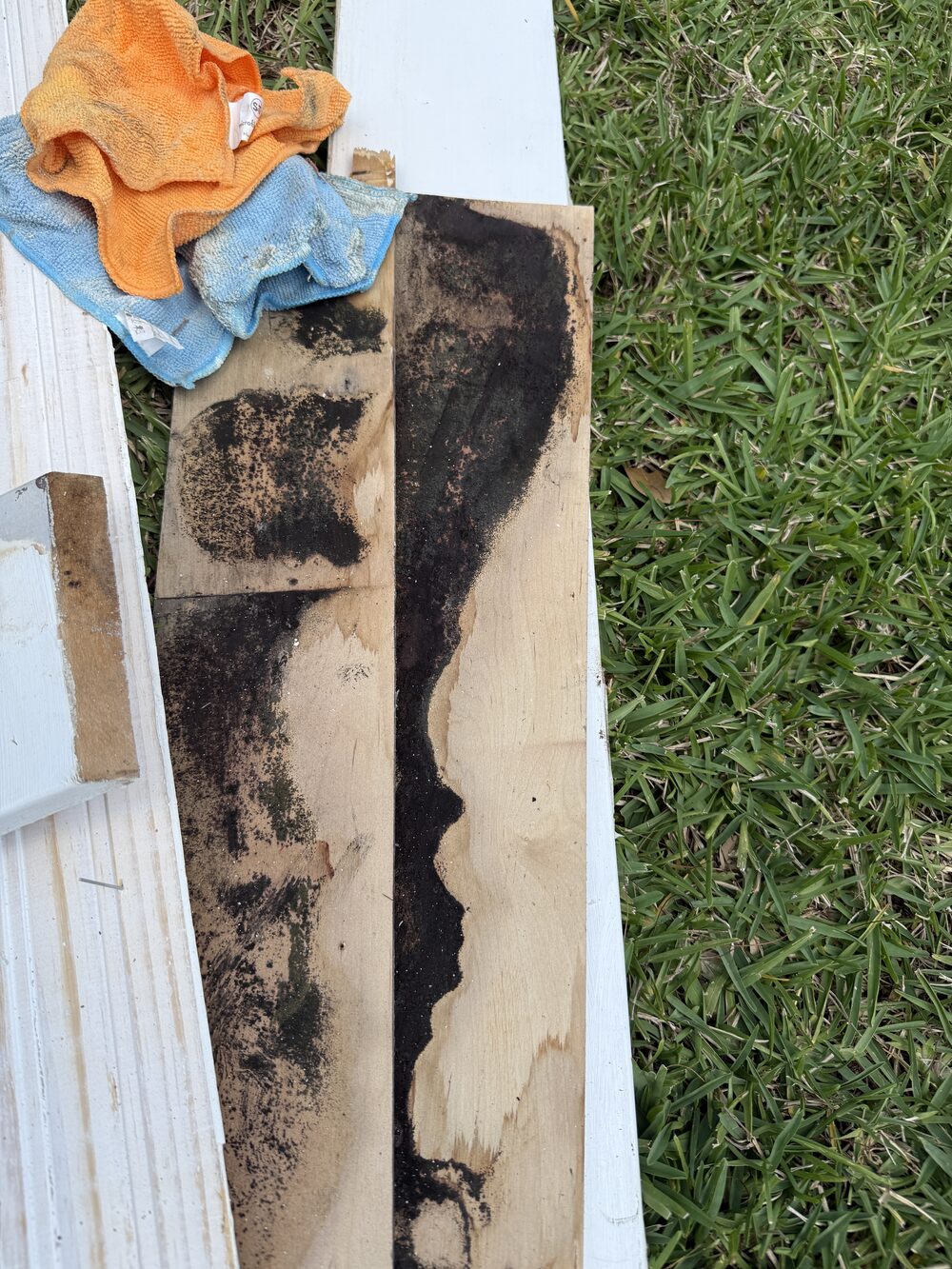 The back face of a baseboard that sat against the wall. This is why porous material comes out instead of getting wiped down.
A note on wording, because it matters here. When we offer a free inspection, we mean we come look at the damage and scope the remediation work at no charge. That is not the same thing as a licensed mold assessment with lab sampling and a written protocol, which is a separate paid service performed by an MRSA licensee.
Any company that blurs those two together is worth a second look.
The useful questions are the ones with a verifiable answer. Four of them:
If water damage came before the mold, and it usually did, the moisture source is the actual problem and the mold is the receipt. Our mold remediation page walks through how we scope and handle that work, and water damage restoration covers the leak or intrusion behind it. Homeowners in Boca Raton can see documented jobs with before and after photos.
Stop the water if you can find it and reach it safely, because everything else is downstream of that. Do not start cutting into walls to see how bad it is, since disturbing growth without containment spreads it. Photograph what you can see before anyone touches anything. Then decide which call you are making.
Pure Shield Restoration is owner-operated and answers 24/7. Call (954) 778-0925 for a free inspection. We serve Boca Raton and across Palm Beach and Broward, the owners are on the job, and we will tell you straight what needs doing and what does not.
Yes, for most jobs. Florida requires a mold remediator license, which carries an MRSR number, for remediation of mold covering more than 10 square feet. Mold assessors hold a separate license with an MRSA number. There are exemptions, including a residential property owner working on their own home and contractors, pest control operators, engineers, architects, and home inspectors acting within the scope of their own license. Anyone holding themselves out to the public as a licensed mold remediator must hold the license. You can verify any Florida license for free at myfloridalicense.com.
A mold inspection, which Florida calls a mold assessment, is the diagnosis. A licensed assessor samples the air and surfaces, evaluates the building history, and produces a written finding about where the mold is, what it is, and how far it has spread. Mold remediation is the treatment. A licensed remediator contains the area, removes the contaminated material, cleans and treats what stays, and dries the structure. The assessment tells you the scope. The remediation does the work.
Usually not. Under Florida Statute 468.8419, a mold assessor may not remediate a structure their company assessed within the previous 12 months, and a remediator may not assess a structure their company remediated in that window. The point is to remove the incentive to find more mold than is really there. There is one exception: a Division I certified contractor, meaning a general, building, or residential contractor, is carved out of that restriction. If a company tells you they can do both, ask which exemption they are relying on.
Go to myfloridalicense.com, use the license verification search, and enter the company or individual name. Mold assessors show up with an MRSA license number and remediators with an MRSR number. Check that the license is active, that the name on it matches the company sending you an invoice, and that the license type matches the work being proposed. It takes about a minute and it is the single most useful thing you can do before signing anything.
Not always, but it is often the right call. If the source is obvious and contained, such as visible mold under a sink after a known supply line leak, a remediator can scope and handle it directly. If the mold is spreading, the source is unclear, there is a health concern, an insurance claim, or a dispute with a landlord, seller, or condo association, get an independent assessment first. A written protocol from a licensed assessor gives you a defined scope and a document that carries weight with an adjuster.
Florida's definitions of mold assessment and mold remediation both apply to mold growth greater than 10 square feet, which is roughly a three by three foot patch. Below that threshold the licensing requirements in the statute do not reach the work. That is a definitional line, not a safety guarantee. A small visible patch often means a much larger moisture problem behind the wall, and square footage on the surface is a poor measure of what is actually going on.
Tell us what's going on and we'll get right back to you. Free inspection, and for active emergencies we answer 24/7.
(954) 778-0925Owner-operated · Boca Raton, Palm Beach & Broward · FL Lic #MRSR5407