Older condo towers on the beach
The towers along 33062 date to the '60s and '70s. Original risers and upstairs-unit leaks are a constant, and the water usually shows up in someone else's ceiling.
 PURE SHIELD
Owner-operated mold and water damage restoration in Pompano Beach, 24/7. From beachfront condo towers to Old Pompano cottages, you deal directly with the owners on every job.
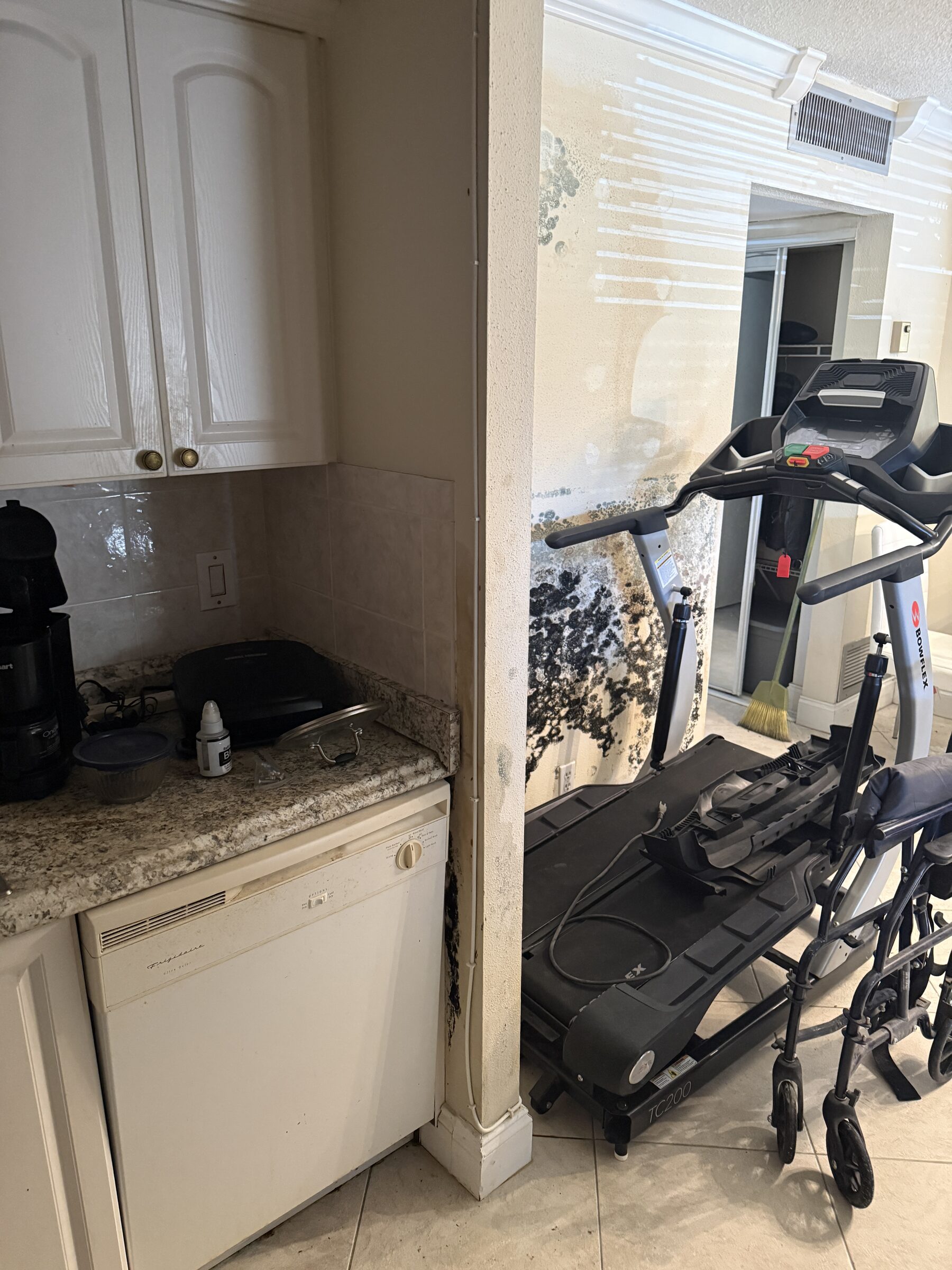
We handle mold remediation and water damage restoration across Pompano Beach. Here's what usually causes it.
The towers along 33062 date to the '60s and '70s. Original risers and upstairs-unit leaks are a constant, and the water usually shows up in someone else's ceiling.
The older cottages and ranch homes around downtown still run decades-old supply lines and drains that let go behind walls.
Year-round AC plus a clogged condensate line equals a slow leak into ceilings, closets, and drywall — Palm Aire's stacked condos see this a lot.
Blocks from the ocean, moisture is relentless. Closets, baths, and closed-up rooms grow mold anywhere air sits still.
Waterfront living means wind-driven rain and storm surge exposure around windows, doors, and seawall-side rooms.
Snowbird condos sit closed up for months — a pinhole leak in May is a full-blown mold job by November.
Most of the residential stock along the A1A corridor in 33062 went up in the 1960s and 70s. Those buildings share vertical risers — the supply and drain lines that run floor to floor through stacked bathrooms and kitchens. Sixty years in, the fittings on those lines are past the age anyone designed them for.
When a riser fitting weeps, it doesn’t announce itself. The water runs down inside the chase between units and shows up two or three floors below, in a ceiling belonging to someone who has no leak of their own. By the time anyone sees a stain, the cavity has been damp long enough for mold to take hold.
The same thing happens on a smaller scale with in-unit failures. A washing machine hose, a water heater, a toilet supply line, an ice maker line behind a refrigerator. In a single-family home that water spreads sideways across a slab. In a tower it goes down, and it becomes somebody else’s problem along with yours.
This is the most common call we get in Pompano, and it’s the one people handle wrong most often.
The instinct is to wait — for the neighbor to fix their leak, for the association to weigh in, for the adjuster to look at it. Meanwhile the ceiling is holding water and the drywall is staying wet. Mold does not wait for the association’s next board meeting. Growth typically starts inside 24 to 48 hours of materials getting wet.
What actually needs to happen is that the two questions get separated. Who pays is one question. Whether the wet material dries before it grows mold is a different question, and it has a much shorter clock. We stop the damage first — extract the water, open what needs opening, and get air moving through the cavity — and document the whole thing as we go, so the payment question can be sorted out afterward with photographs, moisture readings and a written scope instead of memory.
Generally speaking, your policy covers your unit and your neighbor’s covers theirs, but the association’s governing documents and the actual cause of the leak both complicate that. It is worth reading what your policy is likely to cover before you call anyone.
A brown ring on a ceiling is the visible end of something that traveled. Water follows framing, insulation and electrical penetrations, and it usually spreads well past the stain.
Before anything gets patched, the cavity above the drywall has to be dry — actually dry, measured with a meter, not dry to the touch. Painting over a ceiling that still holds moisture buys a few months and a bigger repair. If the material stayed wet long enough, some of it comes out rather than gets dried; that call depends on what the material is and how long it sat. We’ll tell you which one you’re looking at, and we’d rather dry and save something than tear it out for the sake of a bigger invoice.
Under the sink and behind the lower cabinets, fed by a supply line or a drain that seeps rather than drips. Nothing puddles, so nothing gets noticed. The first sign is usually a smell, or a cabinet toe kick that has started to swell.
Grout and caulk discoloration is usually surface and usually cleanable. What matters is whether water has gotten past the tile — behind a shower pan, around a tub surround, into the wall a vanity backs onto. Those are two different jobs and they cost very different amounts.
Year-round cooling plus a clogged condensate line is the single most common source of “where is this water coming from” in Broward. The pan overflows, the water goes into the ceiling below or the closet wall behind, and it repeats every time the unit runs. We see this constantly in the stacked condos around Palm Aire and Cypress Bend.
Anywhere air sits still in a humid house, mold finds it. Garages with a poor door seal, guest rooms nobody opens, closets on an exterior wall a few blocks from the ocean. Salt air keeps everything a little damper than it should be.
These get used interchangeably and they mean different things.
Water mitigation is the emergency work: stopping the spread, extracting standing water, and drying the structure so damage stops getting worse. It happens in the first hours and days.
Mold remediation is removing growth that has already established, under containment, and treating what stays. It happens after the fact.
Water damage restoration is the whole arc, from the emergency call through structural drying to a space that’s put back.
If the water is still there, you need mitigation today. If the water is long gone and you have a smell or a stain, you need remediation. If you’re not sure which, that’s a normal thing not to know, and it’s what the free inspection is for.
A pinhole leak in a unit nobody visits runs unchecked for months. That is the difference between a few hundred dollars of drying and a full-containment job — not the leak, just the time.
If you close up a Pompano condo for the season, there are a handful of things worth doing before you go and a specific order worth checking things in when you get back. We wrote that up: what to check before you unpack.
We work in buildings with rules — access windows, elevator protection, containment requirements, restrictions on when equipment can run. That’s routine for us. We’ll coordinate with the association or the management company directly, follow the building’s protocol, and provide the documentation they ask for.
If you manage units in Pompano and have an owner emergency while the owner is out of state, call us and we’ll take it from there.
Small, caught-early jobs run a few hundred dollars. Most jobs land in the low thousands. Large multi-room losses with rebuild work run higher. On a covered claim, insurance usually carries most of it.
We don’t quote off a photo. You get an honest number after a free inspection, before any work starts, and if the answer is that it’s a surface problem you can handle with a sponge, we’ll tell you that instead of selling you a containment.
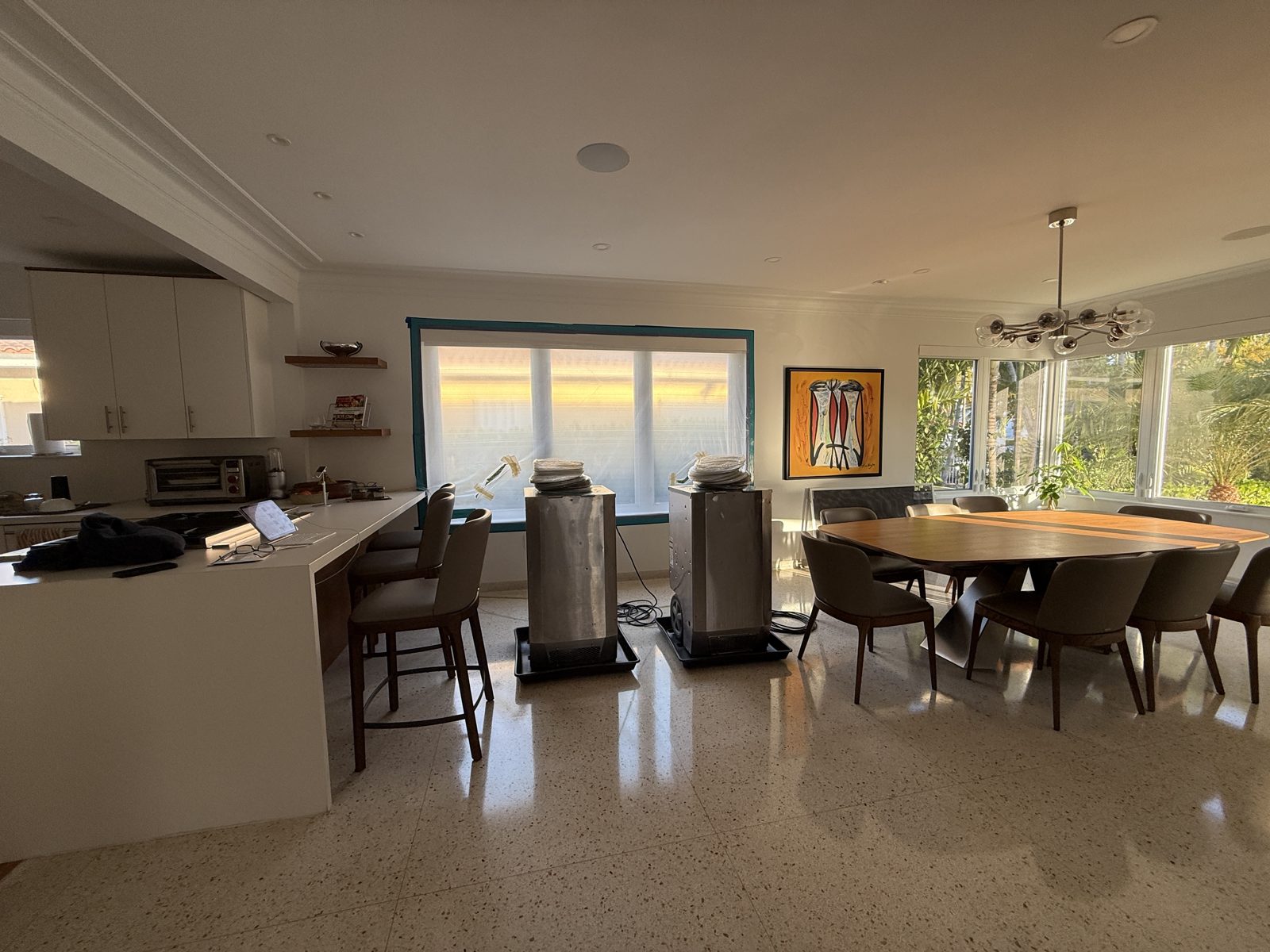
You can see how we handle a full-containment remediation in Pompano, including what we do to keep the rest of the house exactly as we found it. Next door in Deerfield Beach we handle the same buildings and the same failure modes.
We’re licensed for mold remediation in Florida under MRSR5407, IICRC certified, and we answer the phone 24/7 at (954) 778-0925.
Reach a real person any time, day or night, and we dispatch fast.
We trace the moisture, seal off the area, and document everything for your claim.
We extract, dry, remove what's damaged, and treat the space with pro-grade equipment.
A final clean and walkthrough once it's confirmed dry and back to normal.
Actual jobs we've completed, shown with our own photos.
Including ZIP codes 33060, 33062, 33063, 33064, 33069.
Call (954) 778-0925Fast — Pompano is one of our closest Broward service areas from Boca. We answer 24/7 and aim to be on-site the same day, often within a couple of hours for active water emergencies.
Generally, your policy covers your unit's damage and theirs covers theirs — but condo association rules and the cause of the leak complicate it. We contain and dry your unit first, then document everything the way your insurer, their insurer, and the association will want to see. We handle these buildings constantly.
Small, caught-early jobs can be a few hundred dollars; typical jobs land in the low thousands; large multi-room losses with rebuild run higher. If it's a covered claim, insurance usually pays most of it. Either way you get an honest number after a free inspection, before any work starts.
Yes. We coordinate access, follow building rules for containment and equipment, and provide the documentation associations require. If you're a manager with a unit owner emergency, call us directly and we'll take it from there.
Tell us what's going on and we'll get right back to you. For active emergencies, we answer 24/7.
(954) 778-0925