Condo villages on slab
Most of Coconut Creek’s condo stock went up between the 1970s and the 1990s. Almost all of it sits on slab, and a lot of it still runs its original supply lines.
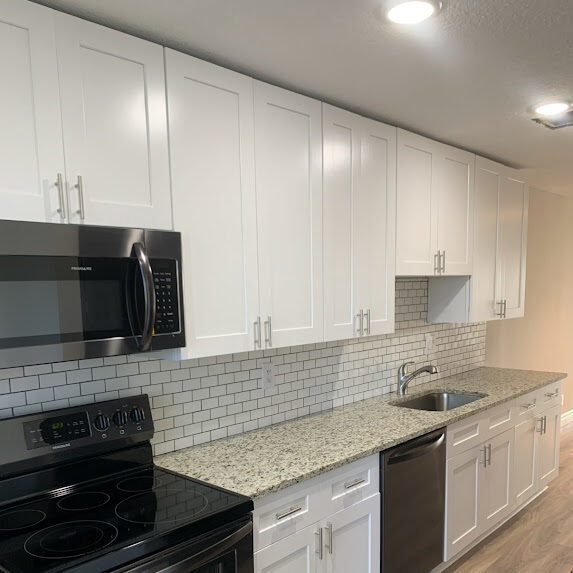
The low-rise villages, Wynmoor Village among them, are stacked units with shared walls and shared plumbing. The city was also planned around lakes, canals and green space, which keeps the humidity up all year.
Put those together and you get the two jobs we see most here: water that travels along the slab from a leak you can’t see, and water that comes through the ceiling from the unit above.
We’re based in Boca, so Coconut Creek is a short run for us. When you call, one of the two owners picks up, and the same two people who look at the job do the work.
When a supply line seeps along the slab
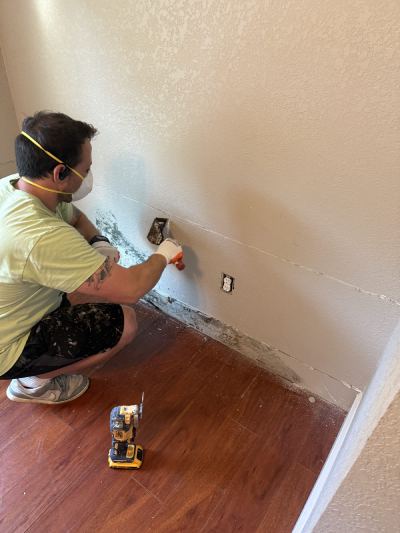
A supply line that bursts gets noticed the same hour, because there’s water on the floor. A line that seeps is worse. Nothing pools, nothing drips where you can see it, and the water moves along the slab for months, soaking the bottom of every wall it reaches.
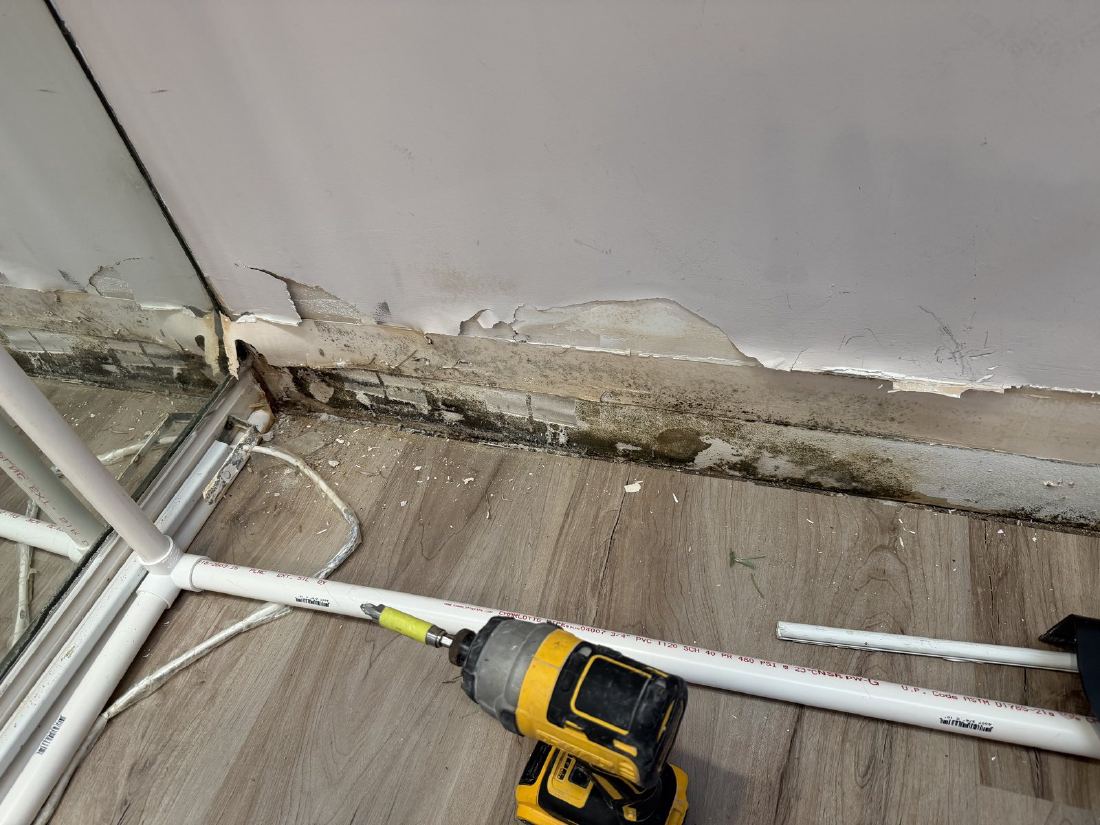
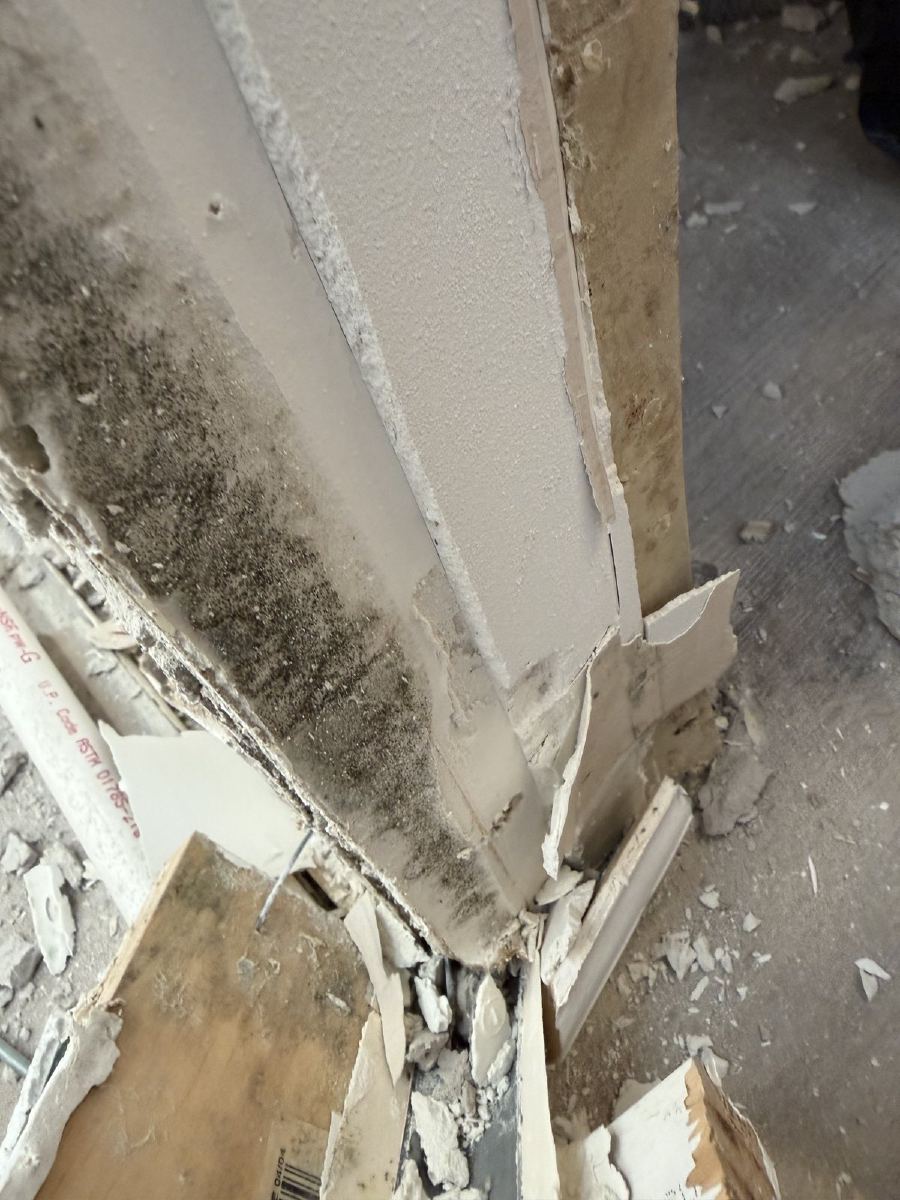
The giveaway is a band of mold or staining a few inches high along the bottom of the walls, sometimes several rooms away from the leak. Soft baseboards and a musty smell you can’t place point the same way.
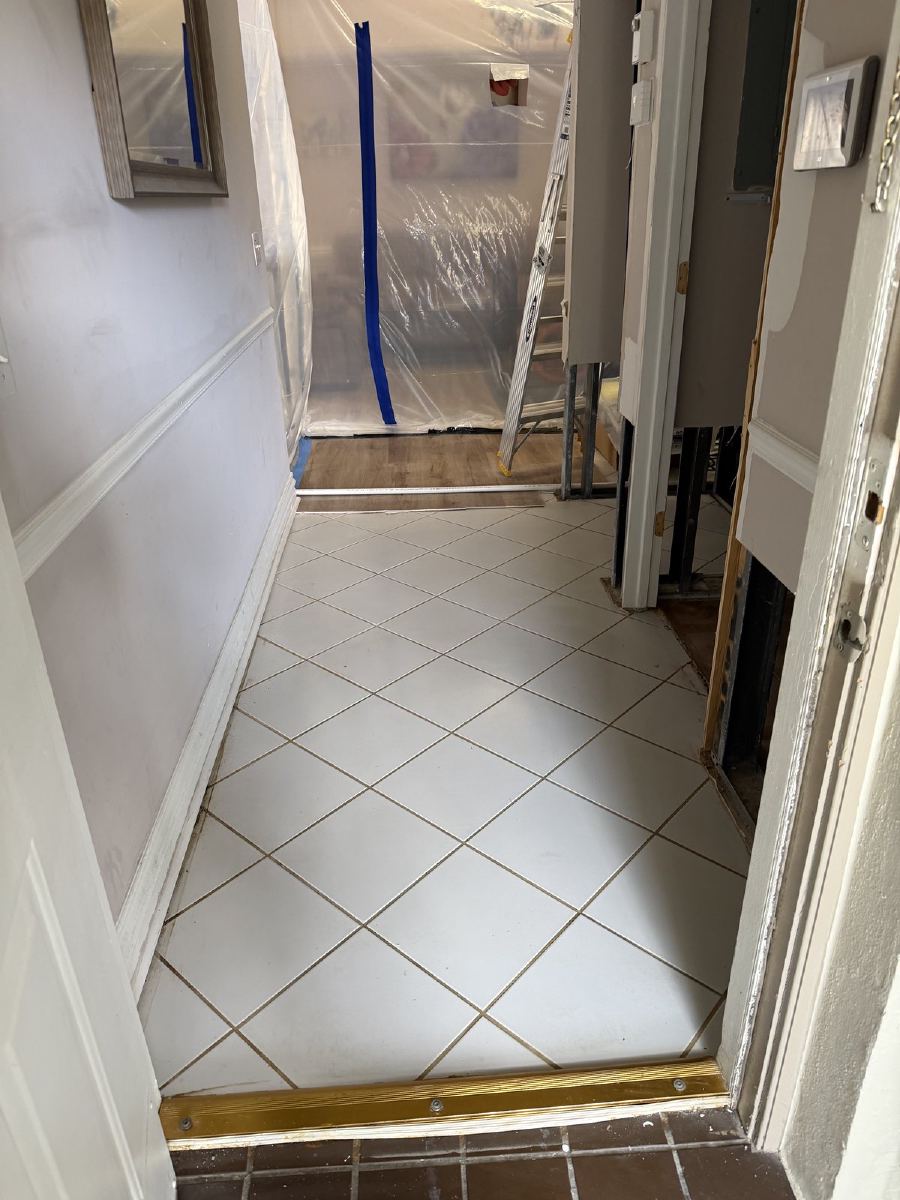
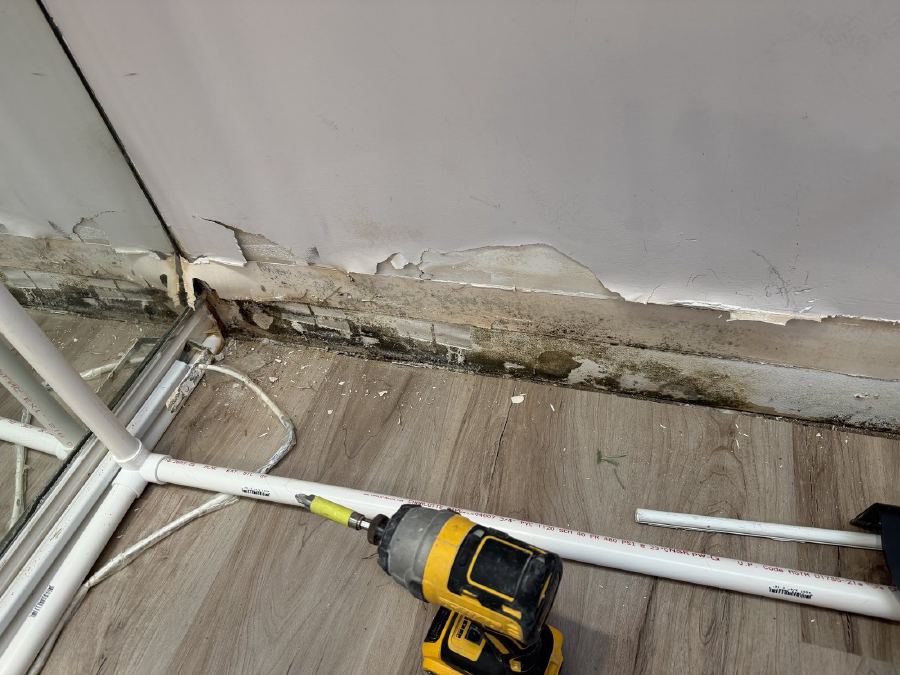
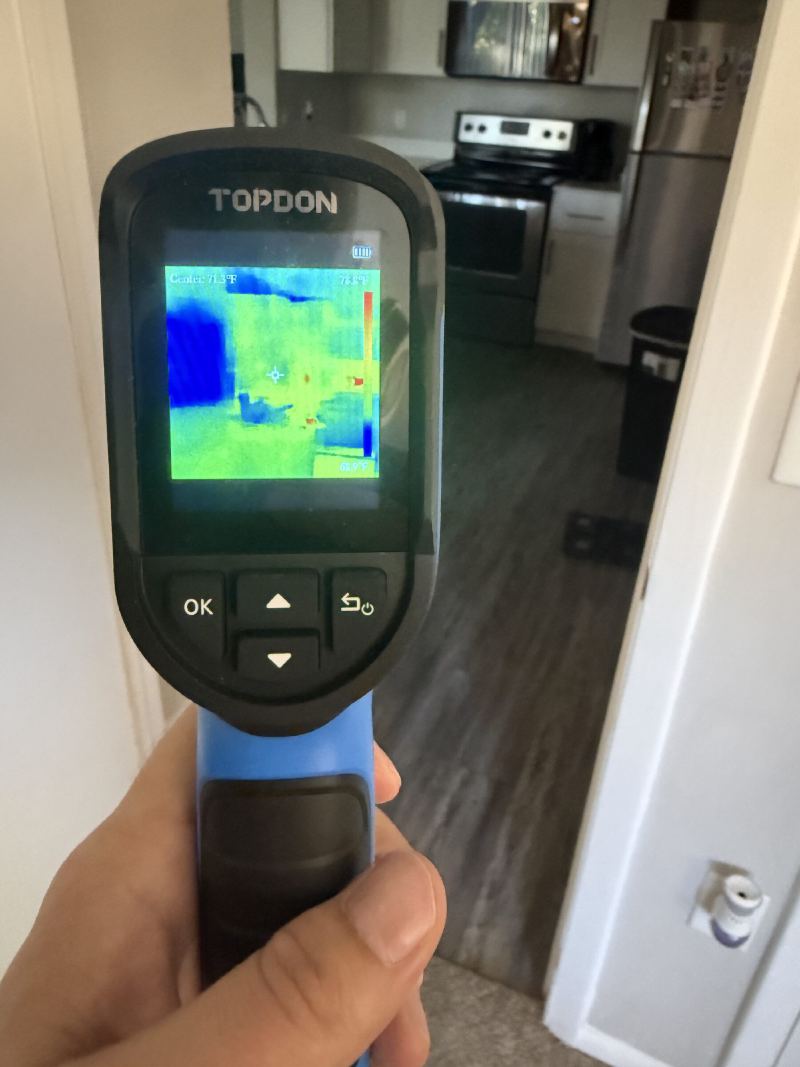
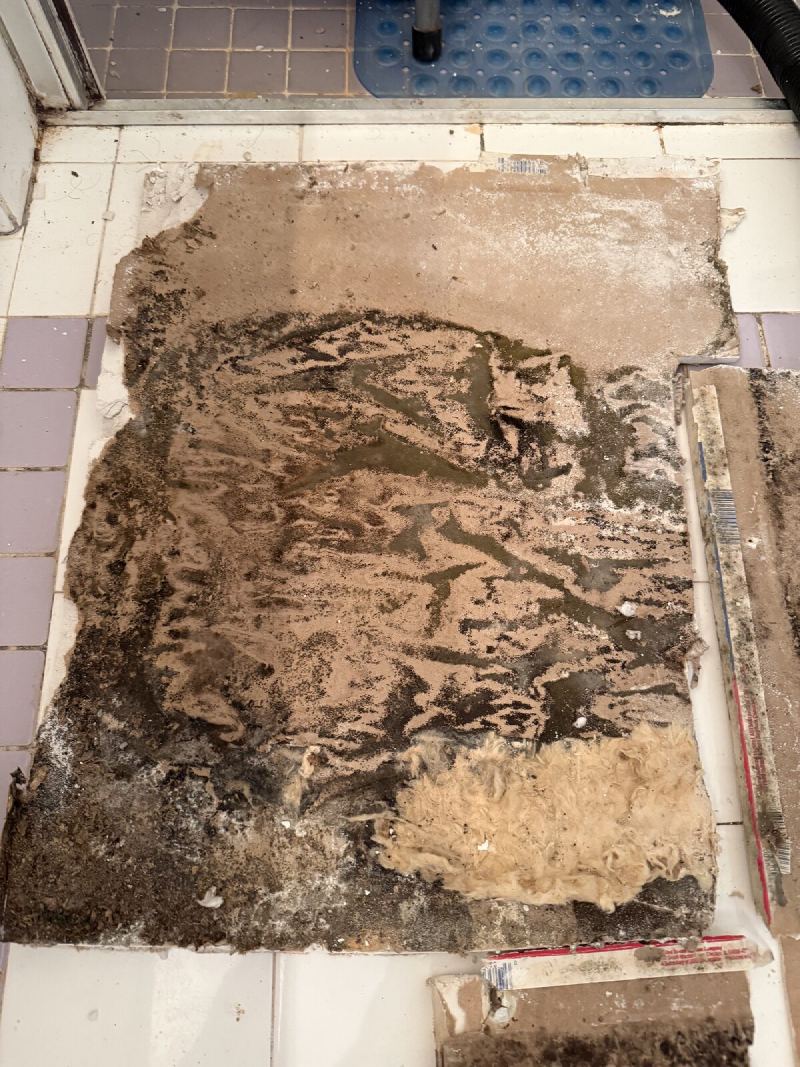
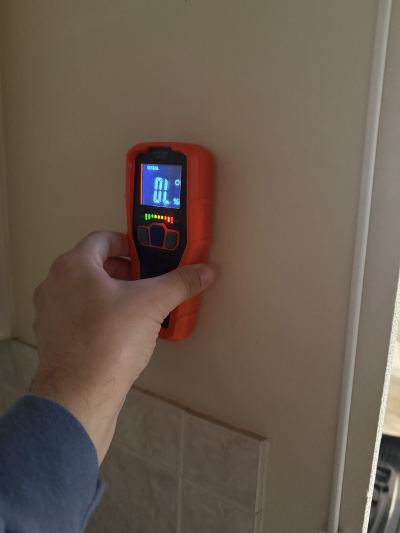
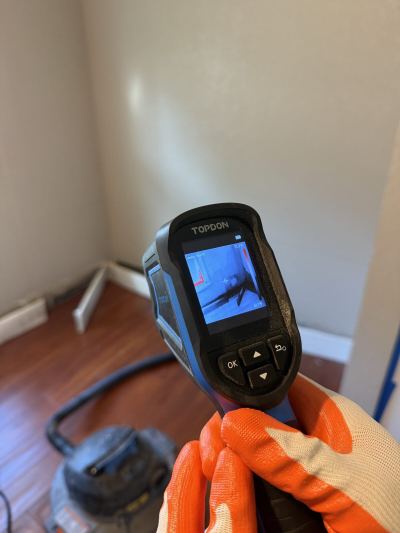
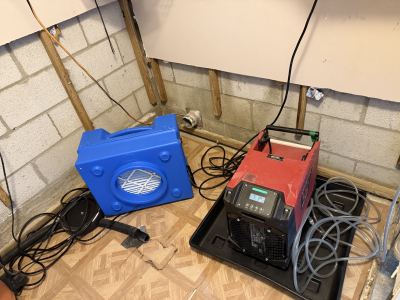
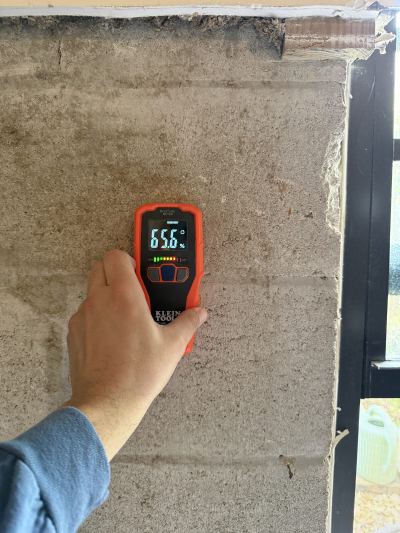
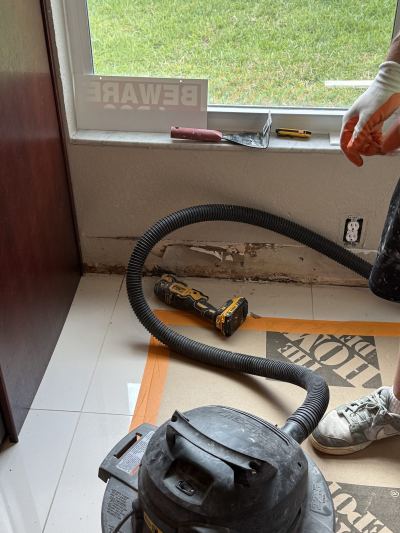
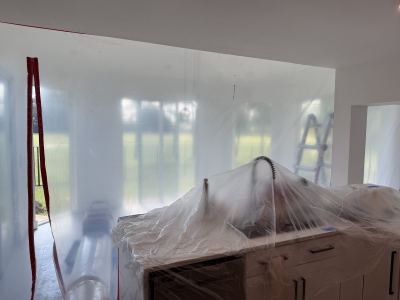
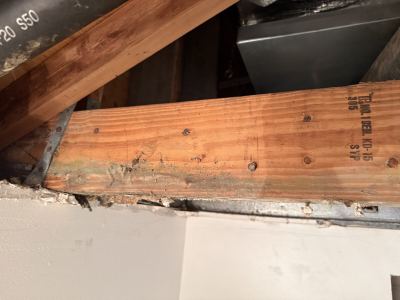
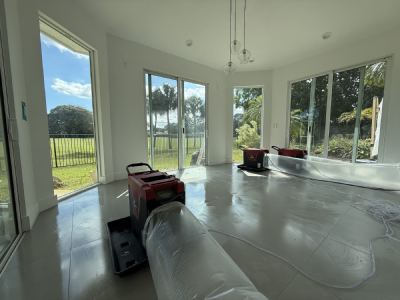
That’s what we found in one Coconut Creek condo. The meter read off the top of its scale on wood that looked fine. The backs of the baseboards were covered, there was growth under the flooring underlayment, and the wet area ran from the living room through to the laundry. Here’s how that job went.
If you see staining low on a wall, don’t paint over it. Have someone meter it first, because what’s visible is usually the smallest part of it.
Leaks from the unit above
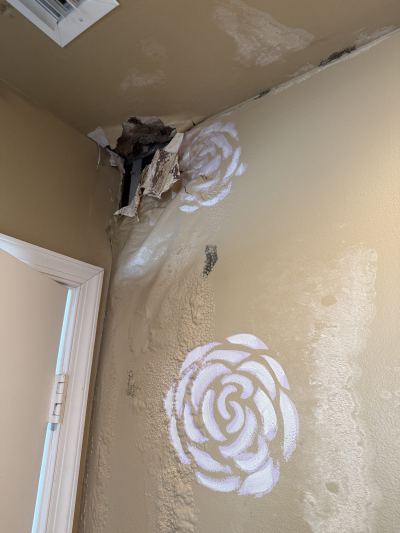
In the condo villages, a failed line or water heater upstairs lands in someone else’s ceiling. The damage inside your unit is usually your claim, the source may be your neighbor’s, and the association may get involved for common elements.
If it’s happening right now:
- Shut off your water if there’s any chance the source is yours, and tell the neighbor above and the association.
- Take photos before anything gets moved or cleaned up.
- Start the drying before everyone agrees on who pays. Wet drywall can start growing mold in a day or two.
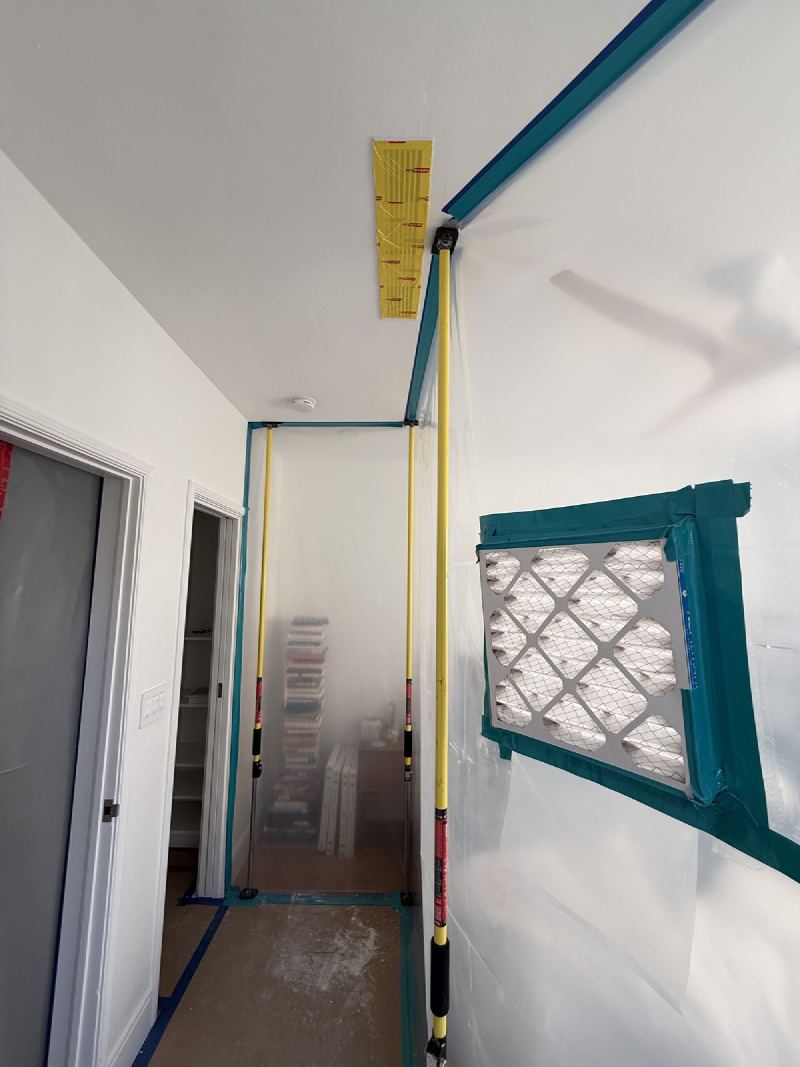
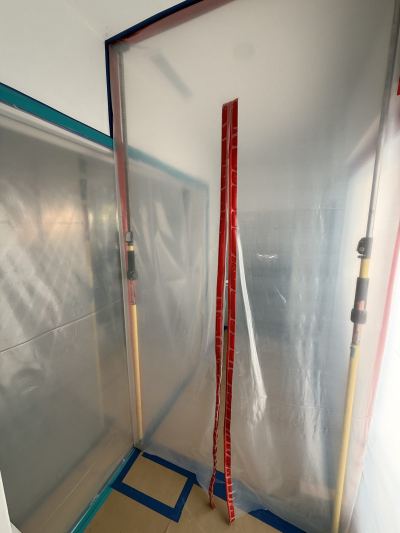
We photograph and meter everything the way adjusters expect, so you’re covered however the responsibility shakes out. We also keep the work sealed off, so nothing tracks into shared hallways. Our insurance claims page covers what’s usually covered and what usually isn’t.
AC closets and condensate lines
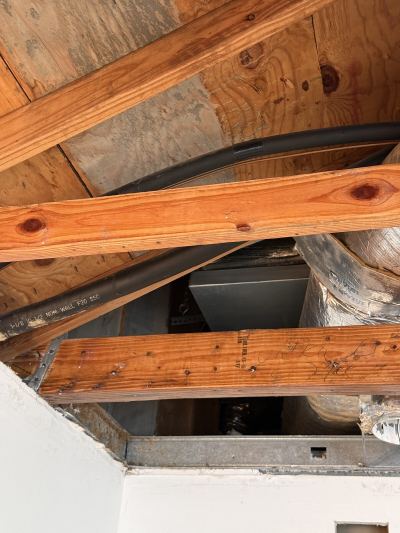
Units run nearly year round here. When the condensate line clogs, the pan overflows into the ceiling, the closet or the wall behind the air handler, and it can go on for weeks before anyone notices the smell.
Look at the wall or ceiling under your air handler once a month, and ask your AC tech to clear the drain line at every service.
Humidity and closed rooms
All the water around Coconut Creek keeps indoor humidity high. Mold grows in bathrooms, closets and any room where the air doesn’t move, even without a leak.
If you’re away for the summer, leave the AC running and the interior doors open. Our checklist for opening up a home that sat closed covers what to look at when you get back.
Storms and wind-driven rain
Tropical systems push water in around windows, sliders and older flat roofs, flood zone or not. Whatever gets in has to be dried properly, or it turns into a mold job in a couple of weeks.
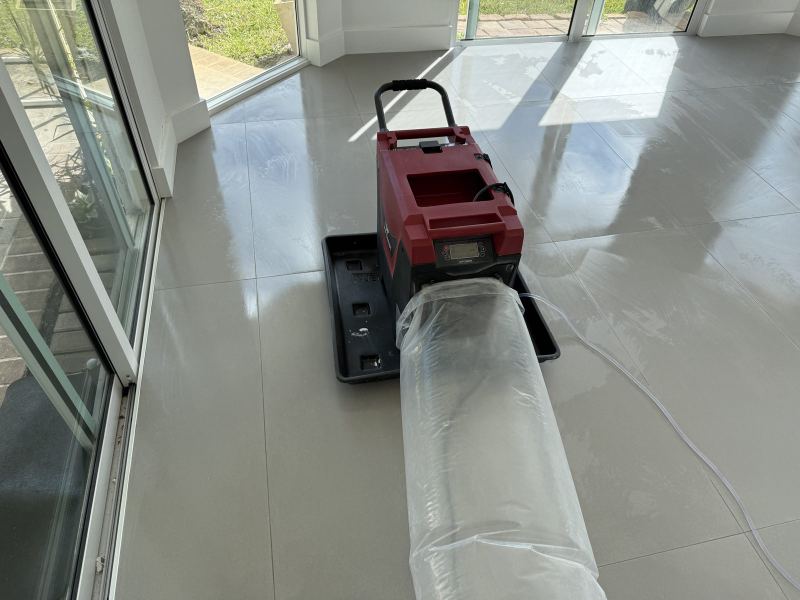
If there’s standing water, the first step is emergency water extraction, then structural drying until the meters say dry. Flood vs. water damage explains how outside water changes the job and the insurance.
Testing is a separate call
Florida doesn’t let the same company test for mold and remove it on the same job. We’re licensed remediators, so when testing makes sense, an independent assessor does it, and we’ll tell you when it’s worth paying for. Mold inspection vs. mold remediation covers who to call first.
What it costs in Coconut Creek
Small jobs caught early run a few hundred dollars. Most land in the low thousands, and big multi-room jobs run higher. On a covered claim, insurance usually pays most of it.
We don’t quote off a photo. You get a number after a free inspection, before any work starts. If it’s a surface spot you can wipe down yourself, we’ll tell you that instead of selling you a job.
The same two owners cover Margate, Coral Springs and Parkland next door. See how our mold remediation works.
We’re licensed for mold remediation in Florida under MRSR5407, IICRC certified, and we answer 24/7 at (954) 778-0925.